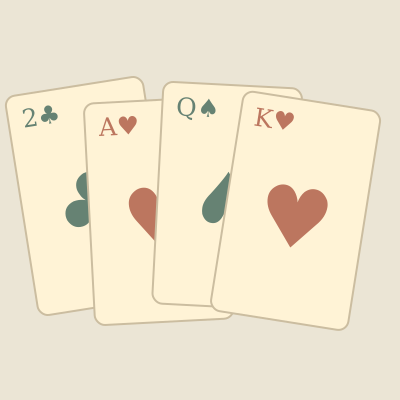
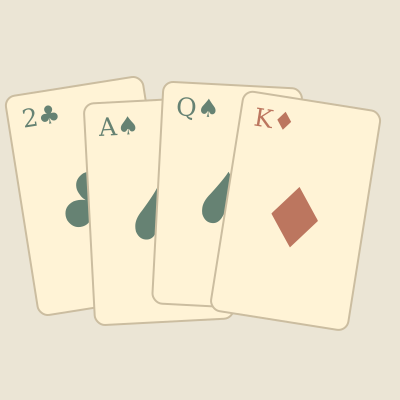
These guides describe the rules implemented here. Other editions and clubs may use different variants. The worked examples are checked against this site's game logic.
Hearts
Finish with the lowest penalty total. Hearts is a four-player individual trick-taking game: winning a trick can be bad when it contains hearts or the queen of spades.
Local AI practice · Private online room Players: 4
Deal thirteen cards each, aces high. Pass three cards left, right, across, then keep your hand every fourth deal. The holder of 2♣ leads that card.
On your turn
Follow the led suit if possible; otherwise discard. Highest card of the led suit wins and leads next. On the first trick, do not discard a heart or Q♠ while you have a safe alternative. Hearts cannot lead until one has been played, unless you hold only hearts.
Winning and ending
Each heart costs one and Q♠ thirteen. Taking all 26 gives you zero and each opponent 26. When anyone reaches 100, the lowest total wins.
Worked example
Synthetic second trick: A♣, 3♣, 2♥, Q♠, with the last two players void in clubs. A♣ wins and collects 14 penalty points.
A common mistake
The queen of spades is dangerous, but is not a trump.
Questions at the table
Does Q♠ break hearts here?
No. This implementation breaks hearts only when a heart is played.
Can low totals tie?
Yes. Equal lowest totals share the result when the game ends.
Further rules references
External rules provide context; the implemented variant described above takes precedence here.
Seats 1 and 3 partner against 2 and 4. Deal thirteen cards each, then each player bids zero to thirteen in order. Nonzero partner bids combine into a contract.
On your turn
Play one card and follow the led suit if possible. Otherwise play any card. Highest spade wins; without spades, highest led-suit card wins and leads next. Do not lead spades before one is played, unless holding only spades.
Winning and ending
A made contract scores ten per bid plus one per overtrick; failure loses ten per bid. Each ten accumulated bags costs 100. At 500, the higher team wins; an equal score continues.
Worked example
Synthetic trick: A♥, 2♠, K♥, 3♥. Player 2 has no hearts. The low 2♠ wins because it is trump.
A common mistake
A trump cannot be played to avoid following a suit you still hold.
Questions at the table
What does a zero bid mean?
Nil promises no tricks: success adds 100, failure subtracts 100.
Do failed-nil tricks help the partner?
No. They add bags but do not fulfill the partnership contract. No blind nil or jokers are used.
Further rules references
External rules provide context; the implemented variant described above takes precedence here.
Play a simulated no-limit Texas Hold’em hand: win a pot by making everyone else fold or showing the best eligible five-card hand. Chips are simulated counters: this game involves no real-money bets, purchases or cash payouts.
Local AI practice · Private online room Players: 2 / 3 / 4 / 5 / 6 / 7 / 8 / 9 / 10 / 11 / 12
Two to twelve players receive two private cards and 1,000 chips each. The small and big blinds are 10 and 20; the dealer position rotates between hands.
On your turn
Act in order: fold, check when nothing is owed, call, or raise to a legal total. Betting surrounds the three-card flop, one-card turn and one-card river. Use any five of your seven available cards.
Winning and ending
Remaining hands contest only pots they contributed to. Ties split a pot; different players may win separate side pots.
Worked example
In a fresh two-player hand, seat 1 calls 10 more chips. Both stacks become 980. Seat 2 checks, revealing the three-card flop.
A common mistake
A raise amount is the total for this betting round, not the extra chips to add.
Questions at the table
Must both private cards be used?
No. You may use two, one or neither when choosing your best five.
Can I check while facing a bet?
Only if your contribution already matches the current bet; otherwise call, raise legally or fold.
What is the hand ranking, strongest first?
Straight flush, four of a kind, full house, flush, straight, three of a kind, two pair, one pair, high card. A-2-3-4-5 is the lowest straight. Compare card ranks within a category; suits never break an otherwise equal hand.
Further rules references
External rules provide context; the implemented variant described above takes precedence here.
 little table