 little table
Go
Surround space and preserve living groups to finish with the higher score. This implementation offers Chinese area scoring or Japanese/Korean territory-scoring presets, with player-confirmed dead stones rather than automatic life-and-death adjudication.
Local AI practice · Private online room
Players: 2
Set up the table
Choose a 9×9, 13×13 or 19×19 empty board. Black starts. The default is 19×19 Chinese scoring with 7.5 points of komi for White; the other presets use 6.5.
On your turn
Place one stone on an empty intersection or pass. Orthogonally connected stones form groups; adjacent empty intersections are liberties. A group with no liberties is captured. Suicide and immediate board repetition are illegal; Chinese rules also forbid any previously seen board.
Winning and ending
Two consecutive passes open scoring. Mark dead groups and neutral regions, then both players confirm, or resume play. Area counts stones plus enclosed space; territory counts enclosed space plus prisoners, then adds White’s komi.
Worked example
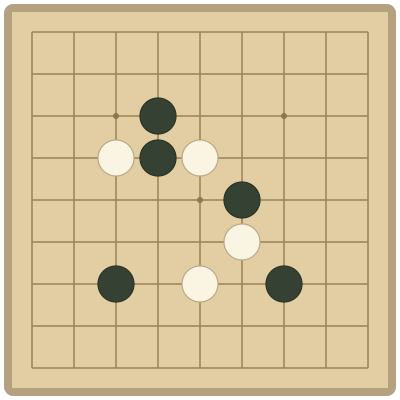
Example position on 9×9, counting from the top-left: White is at (2,2), Black at (1,2), (2,1), (3,2). Black plays (2,3), removes White’s last liberty and captures that stone.
A common mistake
Diagonal contact does not connect a group or supply a liberty.
Questions at the table
Does passing twice immediately declare the winner?
No. Both players must agree to the score; either may resume play.
Are the Japanese and Korean presets complete tournament rulebooks?
No. They share this territory engine, including a draw when a non-Chinese board position occurs a third time.
Further rules references
External rules provide context; the implemented variant described above takes precedence here.